Ketamine-Assisted EMDR Therapy in Oakland, CA
You understand your patterns. Now you’re ready to change them. Ketamine-Assisted EMDR (KA-EMDR) combines ketamine therapy with EMDR to help you go deeper and work with what hasn’t shifted through talk therapy alone



What is Ketamine Assisted EMDR (KA-EMDR)?
Ketamine-Assisted EMDR (KA-EMDR) combines ketamine-assisted psychotherapy with EMDR to support deeper trauma processing. Rather than using ketamine as a stand-alone treatment, the ketamine experience becomes part of a structured therapeutic process that includes preparation, EMDR done together with ketamine, and integration.
Ketamine creates a greater sense of openness and flexibility, making it easier to approach emotions, memories, and experiences that have felt difficult to access in traditional therapy. Familiar protective responses may feel less rigid, creating space to engage with difficult material differently.
I integrate ketamine-assisted psychotherapy with EMDR therapy and IFS to work with trauma, attachment wounds, and longstanding emotional and relational patterns. EMDR provides a framework for processing the experiences that continue to feel unresolved, while IFS helps us approach protective parts with curiosity rather than trying to push past them.
KA-EMDR may be particularly helpful if you have tried therapy before (or even EMDR) but didn’t get the breakthroughs in your healing you were hoping for. This approach may work well if you understand your patterns intellectually but still feel stuck in them emotionally or physically. Ketamine Assisted EMDR can create an opportunity for deeper processing and meaningful change.

Hi, I’m Mary (she/her)


I’m a licensed therapist, Certified EMDR Therapist, trained ketamine therapist, and EMDRIA-approved consultant in Oakland, CA. I specialize in helping people work through trauma and longstanding patterns using Ketamine-Assisted EMDR (KA-EMDR).
My approach integrates ketamine-assisted psychotherapy with IFS-informed EMDR, bringing together the openness that can emerge during ketamine work with the structure and focus of EMDR trauma processing.
I offer ketamine-assisted therapy in collaboration with a licensed medical prescriber, with preparation, EMDR, and integration intentionally woven into the process. My goal is for ketamine to be more than a standalone experience. Ketamine combined with EMDR therapy can help you translate what emerges during ketamine work into meaningful shifts in the patterns, beliefs, and experiences that affect your everyday life.
How Ketamine-Assisted EMDR Is Different
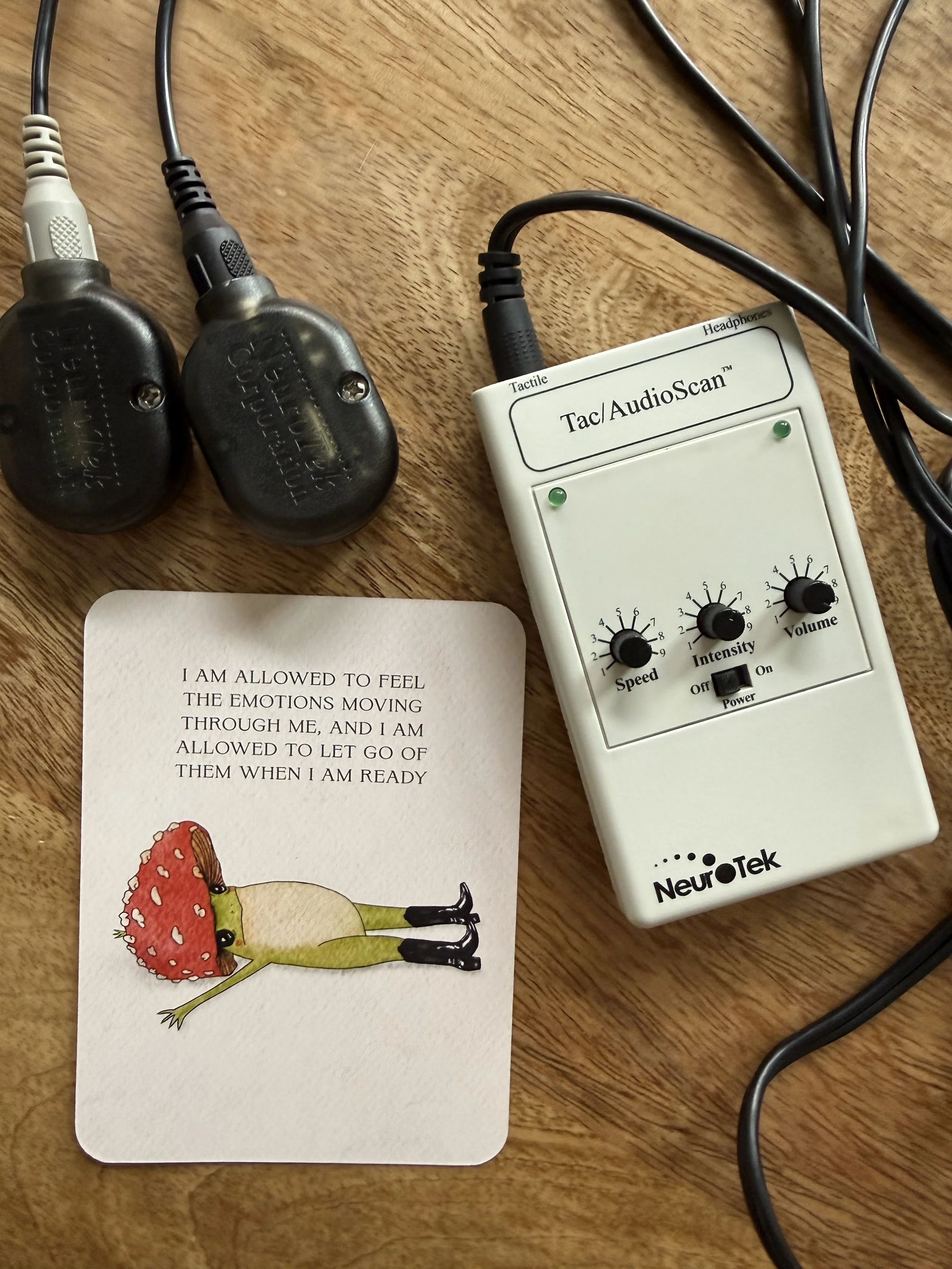
Ketamine-Assisted EMDR is more than simply doing EMDR during a ketamine session. The work is intentionally structured around preparation, ketamine experiences, EMDR processing, and integration.
We use what emerges during ketamine work—memories, emotions, body sensations, beliefs, imagery, or new perspectives—to help guide the EMDR process. EMDR then gives us a way to work more directly with the experiences and patterns underneath what you’re struggling with.
I also integrate IFS throughout the process, particularly when protective parts show up around difficult material. Rather than pushing past those responses, we work with them to create enough safety and openness for deeper processing to happen.
Your KA-EMDR work may include:
Preparation and resourcing before ketamine work
Guided ketamine-assisted psychotherapy
EMDR processing informed by what emerges
IFS and parts work throughout the process
Integration to bring insights and shifts into everyday life
How Does Ketamine-Assisted EMDR Work?


Intake + Treatment Planning
We’ll start by getting to know your history, what feels stuck, and what you hope to change. Together, we’ll explore whether Ketamine-Assisted EMDR is an appropriate fit and begin identifying the experiences, patterns, and treatment targets we may work with. We’ll also talk through the KA-EMDR process and what to expect as we move forward.

Medical Evaluation + Prescription
Before beginning ketamine-assisted treatment, you’ll meet separately with a licensed medical prescriber who will review your medical history, assess whether ketamine is appropriate for you, and manage your prescription.
Your medical provider handles all medical aspects of ketamine treatment, while I provide the psychotherapy, preparation, EMDR processing, and integration that surround your ketamine experiences.

Preparation
We’ll begin with a 2-hour preparation session to identify what you want to work on, explore the patterns and experiences connected to it, and build resources for the deeper processing ahead. Using EMDR and IFS, we’ll also get curious about protective responses that may show up and create a foundation for approaching difficult material without forcing or pushing past it.

Guided Ketamine Meditations + Integration
Your first ketamine experiences are guided sessions designed to help you become familiar with the medicine, turn inward, and approach what arises with curiosity. Together, we’ll notice themes, emotions, and patterns that may inform the EMDR work ahead.
Each ketamine session is followed by a 50-minute integration session to help you process what emerged and begin building a bridge into Ketamine-Assisted EMDR.

Ketamine Assisted EMDR (KA-EMDR)
After the initial ketamine and integration sessions, we begin bringing ketamine and EMDR together more intentionally. During KA-EMDR sessions, we use what we’ve learned about your patterns and the material that has emerged to guide deeper trauma processing.
I integrate EMDR with IFS throughout the process, helping us work with memories, emotions, beliefs, and protective patterns without forcing or pushing past what feels manageable.

Ongoing KA-EMDR + Integration
As treatment continues, KA-EMDR sessions typically begin weekly and may transition to every other week as the work progresses. Between sessions, you may also engage in self-guided ketamine experiences when appropriate.
Throughout the process, we’ll continue integrating what emerges and connecting the work in session to the changes you’re noticing in your everyday life, relationships, and patterns.
Ketamine-Assisted EMDR Structure & Investment
Initial KA-EMDR Program- $3,550
Your initial program creates the foundation for ongoing Ketamine-Assisted EMDR and includes:
90-minute intake
KA-EMDR workbook
Collaboration with your medical/treatment providers
2-hour preparation session
Two 3-hour guided ketamine sessions
Two 50-minute integration sessions
Ongoing Ketamine-Assisted EMDR
$600 per 2-hour session, paid at the time of treatment.
KA-EMDR sessions typically begin weekly and may transition to every other week as treatment progresses. Between sessions, you’ll engage in self-guided ketamine meditations at home to support and deepen the therapeutic work.
Medical evaluation, prescribing, and medication costs are paid separately and directly to your medical provider. Estimated cost: $250 medical intake and prescription, $150 follow up visits, and $100-200 for the prescription.

Every event we host is designed with intention, from the atmosphere we create to the way each session flows.
Financing Available Through CareCredit
CareCredit financing is available for clients who would prefer to spread the cost of Ketamine-Assisted EMDR treatment over time. Promotional financing options may be available for qualifying clients.
Learn more about CareCredit financing here.

Is Ketamine-Assisted EMDR Right for You?
KA-EMDR may be a good fit if you:
Have done therapy before and understand your patterns, but still feel stuck in them
Have unresolved trauma, attachment wounds, or painful experiences that continue to affect you
Find yourself repeating the same emotional or relationship patterns, even when you know where they come from
Become overwhelmed, shut down, or disconnected when trying to approach difficult material
Feel that traditional talk therapy has helped you gain insight, but hasn’t created the deeper shift you’re looking for
Want a more experiential and focused approach to trauma therapy

The Science Behind Ketamine + EMDR
Ketamine has been studied for its effects on mood, PTSD symptoms, and processes related to neuroplasticity, the brain's capacity to adapt and form new connections. Research suggests ketamine can affect biological pathways involved in synaptic plasticity, although researchers are still working to understand exactly how these changes relate to longer-term psychological healing.
EMDR takes a different approach. It is a trauma-focused psychotherapy designed to help the brain process experiences that continue to feel emotionally unresolved.
The idea behind Ketamine-Assisted EMDR is to bring these approaches together intentionally. Ketamine may create a temporary period of greater psychological flexibility, while EMDR provides a structured framework for working with traumatic memories, beliefs, emotions, and body-based responses.
Early research on combining ketamine with psychotherapy for PTSD is promising, including emerging research specifically examining Ketamine-Assisted EMDR. However, KA-EMDR is still an emerging approach, and larger, controlled studies are needed to understand its effectiveness and who is most likely to benefit.
Dig into the Research Supporting Ketamine Assisted EMDR here.
Ready to Explore Ketamine Asssisted EMDR?
If you’ve done therapy before but still feel stuck in patterns that haven’t shifted, Ketamine-Assisted EMDR may offer a different way to approach the work. Schedule a free 20-minute consultation to talk about what you’re looking for and whether KA-EMDR may be a good fit for you.
Frequently Asked Questions
-
Your medical prescriber will determine whether ketamine is appropriate based on your individual health history and circumstances. If ketamine isn’t recommended, we can discuss whether EMDR or another therapeutic approach may be appropriate without ketamine.
-
Ketamine-Assisted EMDR combines ketamine-assisted psychotherapy with EMDR to support trauma processing. In my approach, preparation, ketamine experiences, integration, EMDR, and IFS-informed parts work are intentionally woven together rather than treating ketamine as a standalone experience.
-
Some forms of ketamine treatment focus primarily on the medication experience and symptom relief. KA-EMDR incorporates ketamine into an ongoing psychotherapy process, using EMDR to work with memories, beliefs, emotions, body sensations, and patterns connected to what you want to change.
-
Ketamine may be incorporated into KA-EMDR sessions as part of your individualized treatment plan. Your initial program also includes guided ketamine sessions and integration so that you can become familiar with the medicine and we can learn how you respond before moving into deeper EMDR work.
-
Experiences vary considerably. You may notice changes in your thoughts, emotions, body sensations, imagery, or sense of perspective. Rather than trying to create a particular experience, I’ll support you in approaching what arises with curiosity and using it to inform the therapeutic work that follows.
-
There isn’t a set number that is right for everyone. After completing the initial phase of treatment, ongoing KA-EMDR sessions are typically scheduled weekly to start and may transition to every other week. We’ll continually assess your progress and adjust the treatment plan based on your needs and goals.
I also offer preparation and integration sessions via telehealth throughout California to support your work before and after in-person dosing.
-
Yes, in many cases. KA-EMDR can be used as an adjunct to ongoing therapy, and with your permission, I can collaborate with your existing therapist or other treatment providers to support continuity of care.
-
I will provide a superbill for all billable hours upon request. If you have out-of-network coverage, you may be able to get reimbursement for some of the cost of treatment. Please confirm your out-of-network coverage with your insurance plan directly.
-
Ketamine-Assisted EMDR begins in person at my Oakland office. Your initial program, including guided ketamine sessions, is completed in person so we can build a strong foundation for the work together. After completing the initial program, ongoing KA-EMDR sessions may be available virtually when appropriate.
-
Yes. CareCredit financing is available for clients who prefer to spread the cost of Ketamine-Assisted EMDR treatment over time. Promotional financing options may be available for qualifying clients. You’re welcome to ask about financing options during your consultation.
-
Ketamine treatment can be a big investment. We can talk through a few ways to make it more doable, like working with one of my trained associate therapists at a reduced rate, shifting to 50-minute sessions when appropriate, or spacing sessions out in a way that still supports progress without overwhelming your budget.
-
Ketamine is prescribed and medically managed by a separate licensed medical provider. Your prescriber determines whether ketamine is medically appropriate for you and manages your prescription, while I provide the psychotherapy, preparation, EMDR, and integration components of treatment.